
Almost nobody has outgrown Quickbooks on a Tuesday.
There is rarely a crash, a failed audit or a single moment where the software stops working. Instead there is a slow accumulation of small things. A spreadsheet that has become load bearing. A report that only one person knows how to build. A close that used to take four days and now takes nine, and nobody can quite say when that happened.
That is what makes the decision so hard. The pain is real but spread thin, so it never quite clears the bar for action, and the business keeps absorbing it.
This article covers the signals that actually indicate you have passed the limit, why those signals appear, and what to weigh before you decide to move. It is written for finance leaders who are not sure whether their frustration is normal growing pain or something structural.
First, QuickBooks is not the villain
It is worth saying clearly: QuickBooks is good software. It is the default for small businesses for solid reasons. It is quick to set up, nearly every bookkeeper knows it, daily tasks like invoicing and reconciliation are genuinely easy, and the cost is low.
If you are a single entity with straightforward finances, there may be no reason to change anything.
The problem is not quality. It is fit. QuickBooks was designed for one company keeping its own books. Most of the pain described below comes from asking it to do something it was never designed for, which is to run a group.
The seven signals that matter
Not all frustration is a signal. These are the ones that tend to indicate a structural limit rather than a bad month.
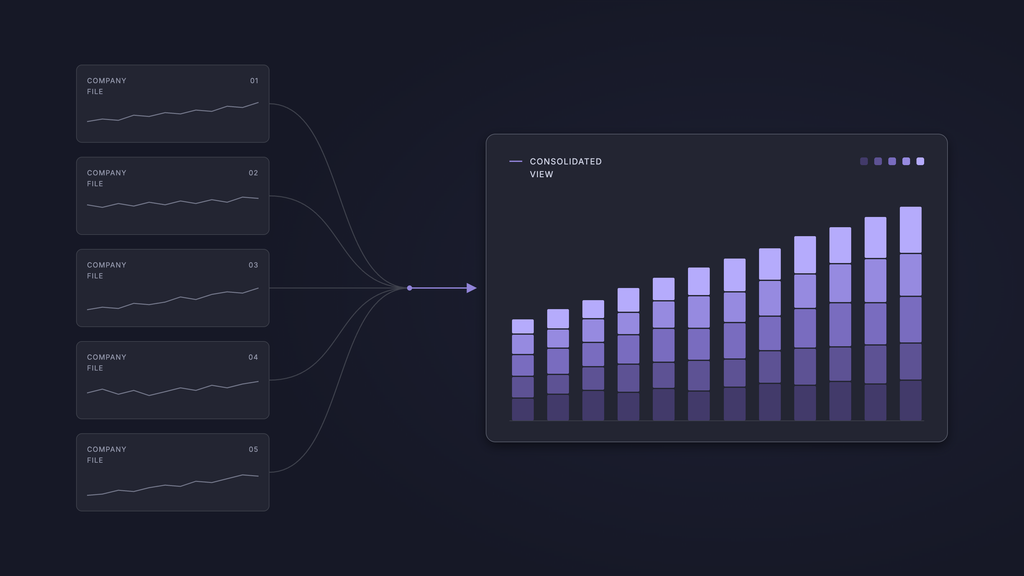
1. You have more than one company file. This is the clearest signal of all. The moment you have two, someone has to combine them by hand to see the whole business. At five files it is painful. Past ten, consolidation becomes a part time job that one person is quietly doing in Excel.
2. Your consolidated numbers live in a spreadsheet. If the only place the full picture exists is a workbook on someone’s laptop, your group reporting has no audit trail, no version control and a single point of failure. Ask yourself what happens to the close if that person is away for two weeks.
3. You are managing around list limits. QuickBooks Online applies usage limits by plan. The Plus plan allows 40 combined classes and locations, while Advanced removes list item limits altogether. If your team is deactivating old classes to make room for new ones, or inventing account code conventions to track something the system cannot track directly, you are paying in human effort for a structural gap.
4. Your chart of accounts is doing a second job. Watch for accounts like 4100 Revenue Chicago and 4101 Revenue Denver. That is location data living inside the account structure because there is nowhere better to put it. Every new site makes the list longer, and every report becomes an exercise in picking the right account ranges.
5. Adding an entity is a project. If opening a new location or closing an acquisition means setting up a fresh file, rebuilding the chart of accounts, reconnecting the bank feeds and redoing the reporting, growth has become expensive in a way that does not show up in any budget line.
6. Your close is getting longer, not shorter. Processes should get faster as teams learn them. A close that stretches year after year is usually a sign that the work is going into reconciliation between systems rather than into the accounting itself.
7. Someone outside the business is waiting. A lender, a board, an investor or an acquirer who needs consolidated numbers on a fixed schedule turns an internal annoyance into a commercial risk.
Three or more of these together usually means the issue is structural. One on its own may just be a process you can fix.
Why this happens to good finance teams
Growth arrives sideways. Companies rarely plan to end up with fourteen company files. They acquire a business, open a location, add a legal entity for a lease or an insurance requirement, and each time the quickest answer is a new file. Each decision is reasonable. The accumulation is not.
The cost is hidden in salaries. The real expense of fragmented systems is not software. It is the hours your controller spends combining data instead of interpreting it. That cost never appears as a line item, so it never gets reviewed.
The common misconception. Many teams believe the next tier up will solve it. Sometimes it does. But if your core problem is that you run multiple entities, moving up a tier of accounting software usually buys you capacity rather than structure. More room for classes does not give you group consolidation, intercompany handling or dimensional reporting across entities. Check which problem you actually have before you pay to solve a different one.
What changes when you move to an ERP
If you do move, these are the four things that make the difference. They are worth understanding before you see any demo, because they are what you should be testing for.
Dimensions instead of account codes. An ERP like Dynamics 365 Business Central lets you tag each transaction by location, department, service line or funding source, separately from the account itself. Your chart of accounts gets shorter rather than longer, and you can report by any combination without rebuilding anything. Get this design right at the start and your tenth location needs no redesign. Get it wrong and you will redo it in year two, which is the single most common avoidable mistake in these projects.
Entities inside one system. Multiple legal entities live in one environment with a shared account structure, so consolidation is a process the system runs rather than a spreadsheet someone builds.
Connection rather than replacement. Moving your general ledger does not mean replacing every tool your team likes. Spend management, payroll, billing and bank feeds can connect to the ERP. This matters more than most vendors admit, because the fear of replacing everything at once is what stalls these decisions.
One source for reporting. With the data in one place, tools like Power BI build reports on current figures rather than on last month’s export, and everyone is looking at the same numbers in the same meeting.
And the honest limitation. An ERP asks more of you at the start. Setup decisions that QuickBooks makes for you, such as posting structures, approval rules and dimension design, become decisions you have to make. That is the source of the flexibility, and it is also why these projects need someone experienced in the room. If a partner tells you the configuration does not matter much, find a different partner.
What it looks like when it works
Microsoft publishes customer stories from these projects, and two are worth noting because the companies are in the same size range as most readers here.
A transport and logistics business moved its finance operations onto Business Central after rapid growth overwhelmed its previous systems. The published story reports close time dropping by a third, and on time receivables improving from 70 percent to 88 percent.
A railroad supply company made a similar move away from manual processes. Its published story reports finance staff saving up to half the time they had been spending on that work.
Your results will depend on your starting point and how much manual effort you are carrying today. The pattern worth noting is not the specific percentage. It is where the gains come from, which is almost always the elimination of work that was happening between systems rather than inside them.
Common questions
How do we know if it is worth the cost? Start by measuring what you spend now. Count the hours per month your team spends on consolidation, reconciliation between systems and manual reporting, then multiply by loaded salary cost. Most teams are surprised. That number, plus the cost of decisions made on stale information, is the real comparison.
Will we lose our history? No, but be deliberate about it. A typical approach brings over open balances and a defined number of years of transaction history, and keeps the old system available in read only form for anything older. Decide this early, because it affects timeline and cost.
How long does it take? For a focused general ledger implementation with a small finance team, think in months rather than quarters. Scope drives everything. Adding payroll, inventory or heavy integration work changes the answer considerably.
Can we do it without disrupting the business? Most teams go live at a period or year boundary and run a parallel period. The disruption is real but containable. The bigger risk is usually change management, not technology.
The real question
The question is not whether QuickBooks is good software. It is whether your business still looks like the business QuickBooks was designed for.
If you are running one company with simple finances, it probably does. If you are running several entities and combining them by hand every month, the system is no longer the limiting factor in your finance team’s performance. Your finance team is.
Key takeaways
- Outgrown QuickBooks is gradual, which is why it goes unaddressed for too long
- The clearest structural signals are multiple company files, consolidation done in spreadsheets, and a chart of accounts carrying location or department data
- Moving up a tier of accounting software adds capacity, not structure. Confirm which problem you have
- Dimensional reporting, entities in one system, integration with existing tools and a single reporting source are what actually change
- An ERP asks more setup decisions of you up front, and that is both the benefit and the risk
- Measure your current manual effort in hours and salary cost before comparing anything.
Need help?
If several of these signals look familiar, the useful next step is not a demo. It is an honest look at where your current process breaks down and what it is costing in time. Reach works with finance teams making this move, and we are happy to talk it through, including the cases where staying where you are is the right answer.

Marketing and Sales Lead at Reach
Dan Kosanovic is a Market Leader and Dynamics 365 Expert at Reach International with extensive experience in strategic business development and client relationship management. He specializes in developing innovative marketing strategies that drive brand visibility and revenue growth. Dan successfully manages complex projects while leveraging cutting-edge technologies to optimize business processes. Dan is passionate about exploring new opportunities to help organizations improve their systems and processes through strategic partnerships and technological innovation.