
Executive Summary
When a global manufacturing leader faced losses from supply chain disruptions in a single quarter, they turned to AI for a revolutionary approach. By implementing a predictive multi-agent AI system using Microsoft Azure AI Foundry and Copilot Studio, their reactive supply chain system was transformed into a proactive, self-healing ecosystem. The result: reduction in production delays, avoided disruptions annually, and a supply chain that anticipates problems weeks before they materialize.
The Challenge
When a company operates across multiple manufacturing facilities with thousands of suppliers globally, the company can struggle with cascading supply chain failures that seem impossible to predict. The challenges may include:
- Couple of production line stoppages per month due to material shortages
- 48-hour lag time in identifying supplier performance issues
- Quarterly losses from expedited shipping and production delays
- Excess inventory costs annually from overcompensating with buffer stock
- Zero visibility into second and third-tier supplier risks
- Weather and geopolitical events causing unexpected disruptions
Traditional ERP systems and manual monitoring couldn’t process the volume of variables needed for true predictive capabilities. The company needs a solution that could synthesize millions of data points in real-time and take preemptive action.
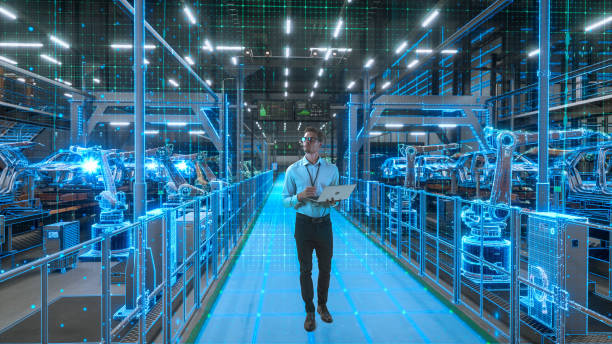
The Solution: Intelligent Multi-Agent Architecture
With a sophisticated multi-agent ecosystem where specialized AI agents continuously monitor, analyze, and respond to supply chain dynamics, creating a self-healing network that prevents disruptions before they occur.
Agent Ecosystem
Supplier Performance Agent: Monitors real-time metrics from all suppliers including on-time delivery rates, quality scores, financial health indicators, and production capacity. Uses pattern recognition to identify degrading performance 3-4 weeks before it impacts production.
Weather Disruption Agent: Tracks global weather patterns, natural disasters, and climate events across all supplier locations and shipping routes. Integrates with multiple weather APIs and satellite data to provide 30-day risk assessments for each supply chain node.
Inventory Optimization Agent: Maintains dynamic safety stock levels based on real-time risk assessments, demand forecasts, and supplier reliability scores. Automatically adjusts reorder points and quantities to balance carrying costs with disruption risks.
Alternative Supplier Agent: Pre-qualifies and maintains relationships with backup suppliers, continuously updating capability matrices, pricing, and availability. Can initiate emergency procurement within minutes of detecting primary supplier issues.
Orchestration Layer: Built on Azure AI Foundry and Copilot Studio, coordinates all agents to create unified risk scores and automated response protocols, ensuring synchronized action across the supply chain.
Technical Implementation
The solution leverages Microsoft’s enterprise technology stack:
- Azure AI Foundry and Copilot Studio for agent orchestration and predictive model deployment
- Power Automate for automated supplier communications and order management
- Dynamics 365 Supply Chain Management for ERP integration
- Azure IoT Hub for real-time sensor data from manufacturing facilities
- Power BI for executive dashboards and risk visualization
- Azure Functions for event-driven processing and alert management
Each agent processes its domain independently while sharing insights through a centralized knowledge graph. This enables parallel risk assessment while maintaining a holistic view of supply chain health.
Results and Impact
The transformation will exceed all expectations within the first six months:
Performance Metrics
- Disruption Prevention: Reduction in production delays
- Response Time: From 48 hours to under 15 minutes for risk identification
- Inventory Optimization: Reduction in safety stock requirements
- Supplier Switches: Automated failover completed in under 2 hours
- Forecast Accuracy: Improved for critical components
Business Outcomes
- Cost Avoidance: Savings annually in prevented disruptions
- Inventory Reduction: Savings from optimized buffer stocks
- Productivity Gains: Increase in overall equipment effectiveness (OEE)
Customer Impact: On-time delivery improvements
Key Innovations
The breakthrough came from treating the supply chain as a living ecosystem rather than a linear process. Each agent contributes specialized intelligence that, when combined, creates emergent predictive capabilities far beyond traditional planning systems.
The Weather Disruption Agent, for example, doesn’t just track storms—it understands the ripple effects. When monitoring a typhoon approaching Southeast Asia, it immediately identifies all potentially affected suppliers, calculates impact probabilities for each SKU, and triggers the Alternative Supplier Agent to secure backup capacity before competitors even know there’s a risk.
Meanwhile, the Inventory Optimization Agent dynamically adjusts safety stocks based on these risk signals, increasing buffers for high-risk items while reducing excess inventory for stable supply lines. This intelligent balancing act has eliminated both stockouts and excessive carrying costs.
Looking Forward
This implementation represents a paradigm shift in supply chain management—from reactive firefighting to predictive prevention. The multi-agent architecture continues learning and improving, with each potential disruption making the system smarter and more resilient.
As supply chains grow increasingly complex and interconnected, this AI-driven approach provides the agility and intelligence needed to thrive in uncertainty. The company can now view supply chain disruptions not as inevitable crises but as preventable events, positioning them as a leader in manufacturing excellence.